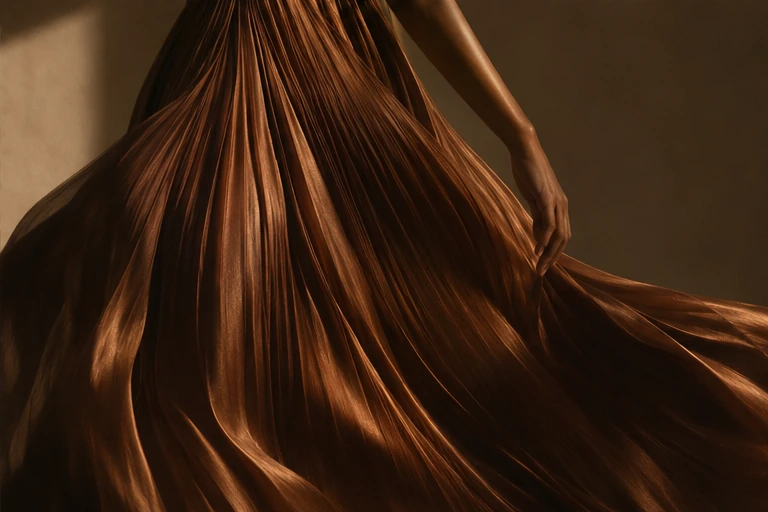
A garment can look entirely different in two photographs made seconds apart. A turn of the shoulder can reveal the weight of a sleeve, while a small change in light can flatten the weave.
Watch how the surface catches light
Look at the material under direct and indirect light before setting the frame. Side light often reveals the relief in a textured surface. A broader source can let the outline of a polished fabric carry the image. The useful choice depends on what the garment needs to show.
Put movement in the brief
A still image can suggest motion, but a short clip can show how a garment settles after a step. Begin with an ordinary movement: walking, reaching, turning. Watch where the fabric gathers or releases, then choose the angle that explains it most clearly.
Pair the close view with the whole
A close crop can reveal stitching, grain or the edge of a seam. A wider frame shows how those details sit on the body. Planning both views gives the edit a vocabulary, especially when the same shoot must serve an editorial story and a compact digital layout.